
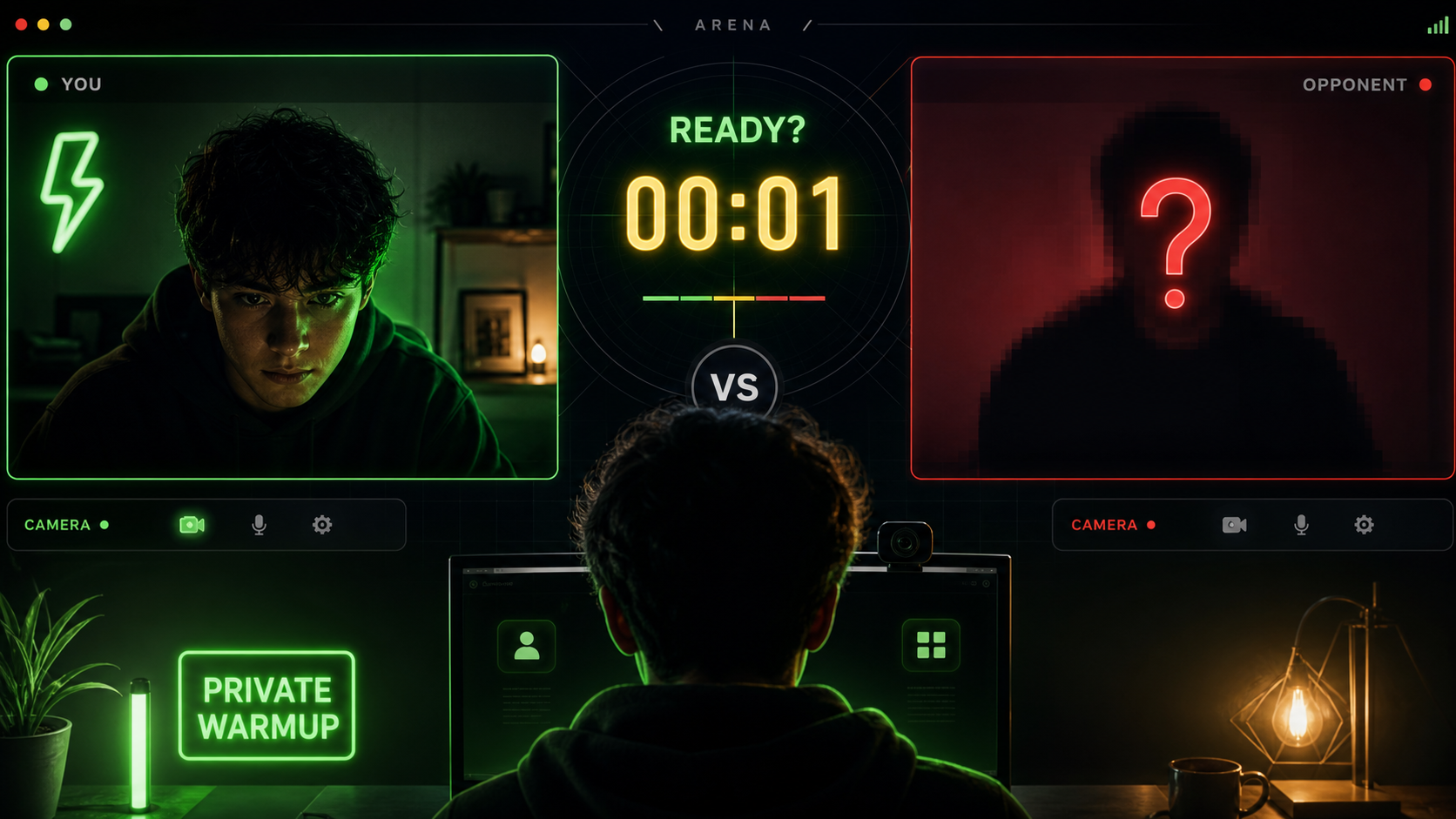
If you want to win Omoggle, do not start with a secret hack. Start with the first camera frame. In an Omoggle-style arena, people judge fast: angle, lighting, expression, background, and your first few seconds on camera matter before any clever trick does.
That said, there is one timing trick people talk about: covering your face or camera right before the PK countdown ends. Some YouTube and short-form clips claim it can help. Treat it as an unverified trick, not a guaranteed win condition.
OmoggleMog is not affiliated with Omoggle. This guide is for adults, entertainment, and self-improvement. It does not predict real Omoggle Elo, promise wins, or provide an objective attractiveness diagnosis.
Last updated: May 8, 2026.
Quick Answer
The fastest way to improve your Omoggle result is to control the first camera frame: use an eye-level camera, soft front light, a clean background, a relaxed expression, and a short opening line. The 1-second countdown cover trick may be worth testing, but it should support a good setup, not replace it.
The 1-Second Trick People Try Before the Omoggle Countdown Ends
Some users claim that covering your face or camera right before the countdown ends can help in a PK. The idea is simple: avoid a bad frozen expression, disrupt the weakest frame, then reveal your face at the moment the match starts.
There is no public proof that this guarantees a win. Omoggle-style scoring and viewer reactions can vary, and different clips may show different timing. Use the trick as a small experiment, not as the whole strategy.
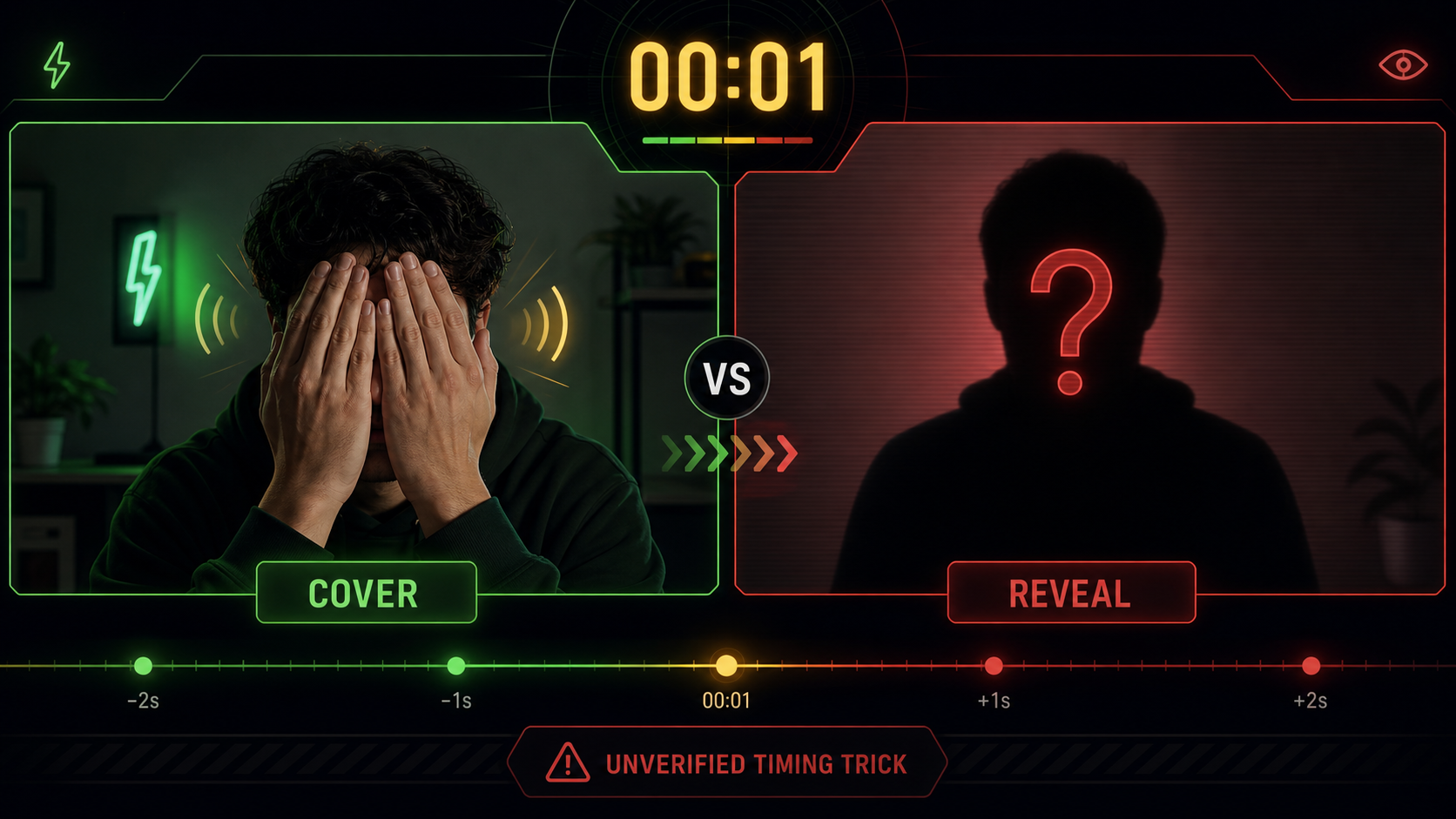
If you try it, keep it clean:
- Cover your face or lens for less than a second.
- Reveal before you look awkward or confused.
- Keep your shoulders still.
- Return to a neutral expression, not a panic face.
- Do not keep blocking the camera after the match starts.
The risk is obvious: if you mistime it, you may look nervous, evasive, or annoying. A bad angle, dark light, and stiff posture will hurt more than this trick can help.
What Actually Helps You Win More Often
Omoggle-style results come from a mix of camera presentation, quick social judgment, and timing. You cannot control every opponent or every scoring moment. You can control what the camera sees.
| Factor | Why it matters | What to test |
|---|---|---|
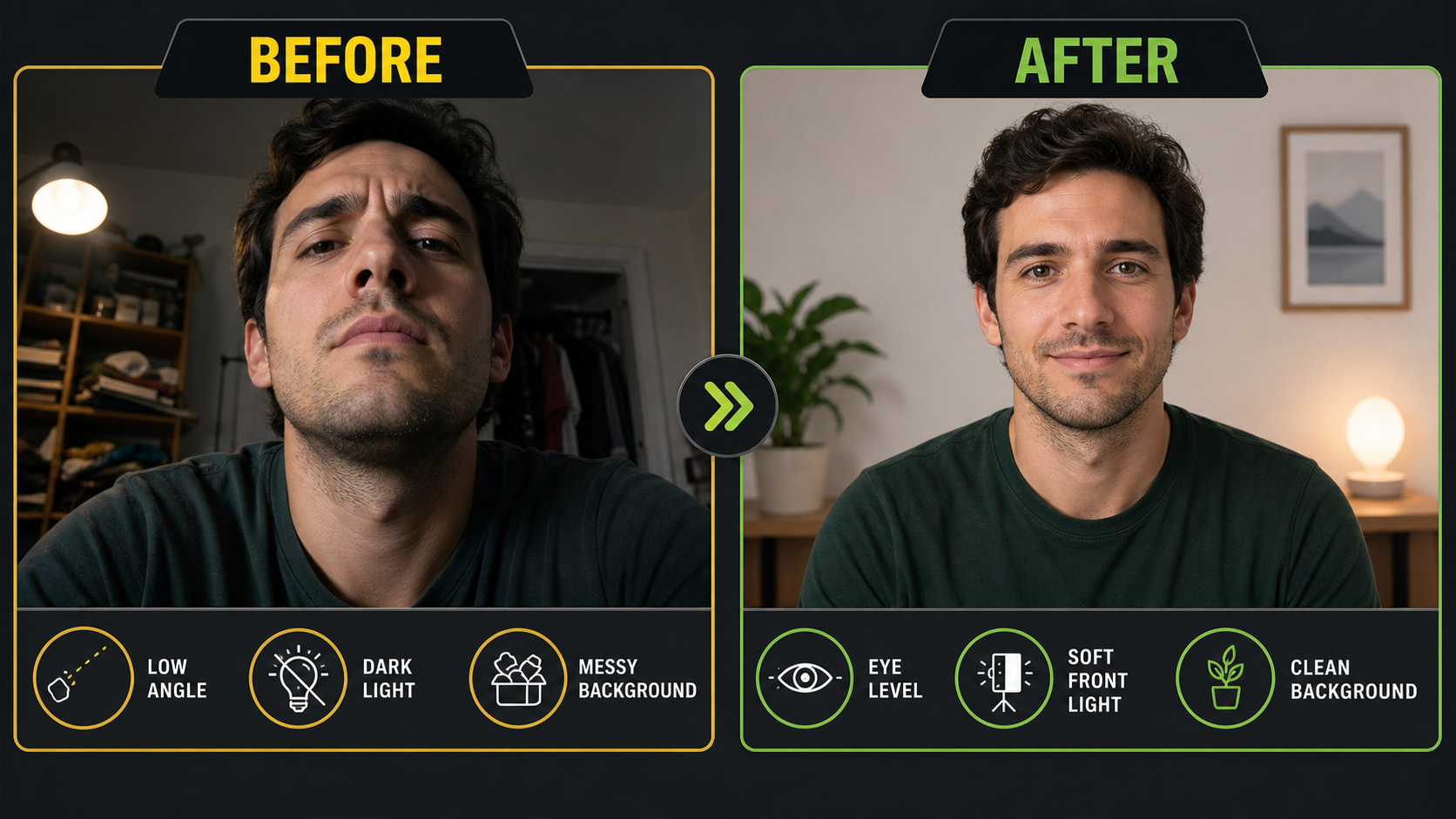
| Camera angle | Low angles exaggerate the chin, nose, and shadows. | Put the camera at eye level or slightly above. |
| Lighting | Dark or side-heavy light makes your face harder to read. | Use soft front light from a window or lamp. |
| Framing | Cropped faces and huge close-ups feel chaotic. | Show head and shoulders with a little space above. |
| Expression | A frozen face reads as nervous. | Start neutral, then add a small relaxed smile. |
| Background | Clutter distracts from your face. | Use a clean wall, shelf, curtain, or simple room corner. |
| First line | Silence can feel awkward fast. | Prepare one short opener before you click start. |
Camera Setup That Actually Matters
Before you think about tricks, fix the boring things. Boring wins here.
Put your camera at eye level. A laptop below your chin makes the shot heavier and less flattering. Stack your laptop, lower your chair, or use a phone stand until your eyes meet the camera straight on.
Face a soft light source. Window light is usually better than ceiling light. If you use a lamp, place it in front of you, not behind you. Backlight turns your face into a shadow.
Clean the background. You do not need a perfect room. You need fewer distractions. Close closet doors, move laundry, hide random objects, and give the camera one calm surface behind you.
Frame your head and shoulders. Do not push your face into the lens. Do not sit so far back that your expression disappears. A good frame shows your face clearly and gives your posture room to read.
Your First 3 Seconds Matter
The first 3 seconds decide whether you look ready or caught off guard. Do not enter the match while adjusting your hair, fixing your chair, or staring at yourself on screen.
Have a default opening posture:
- Sit still.
- Look near the camera, not only at your own preview.
- Keep your mouth relaxed.
- Let your shoulders drop.
- Use one short opener.
Good openers are simple:
- "Yo, what's up?"
- "All right, let's see the score."
- "Good luck."
- "That countdown was brutal."
You do not need a monologue. You need to avoid the dead-air moment where your face says, "I regret clicking this."
How to Use the Countdown Cover Trick Without Looking Weird
If you want to test the hand-cover move, make it part of a clean sequence.
First, set your frame. Second, wait for the final second. Third, cover briefly. Fourth, reveal with a neutral face. Fifth, hold still for the first beat after the match starts.
Do not wave your hands around. Do not cover for several seconds. Do not make it look like you are hiding from the camera. The point is a quick reset, not a full magic act.
A good version looks intentional. A bad version looks panicked.
What Not to Do
Do not rely on darkness. Some people think low light hides flaws. In practice, it often makes the camera look worse and makes your expression harder to read.
Do not shove your face into the lens. Close-up distortion can make the nose, jaw, and forehead look different from real life.
Do not keep switching angles. Movement during the countdown can create worse frames than staying still.
Do not chase approval from strangers. Omoggle-style arenas are intense because feedback is instant. Treat the result as a game signal, not a verdict on your worth.
Do not upload someone else's photo to a scoring tool. Use your own image or one you have permission to use.
A Private Warmup Before You Go Live
If you want to practice before entering a random video arena, OmoggleMog gives you a private warmup flow. You can open your camera or upload a photo, check your readiness score, and get quick feedback on controllable presentation factors.
Use it to test questions like:
- Is my camera too low?
- Is the lighting too harsh?
- Does my expression look tense?
- Is my background distracting?
- Would I look more natural with a small posture change?
The point is not to become someone else. The point is to remove easy mistakes before strangers or a live arena see them.
Simple Omoggle Setup Checklist
Use this before you click start:
- Camera at eye level.
- Soft light in front of you.
- Clean background.
- Face centered, shoulders visible.
- Neutral expression ready.
- One short opener prepared.
- Optional: test the 1-second cover trick once, then decide if it helps.
If you can pass that checklist, you are already ahead of users who enter with a dark room, bad angle, and no plan.
Related Omoggle Guides
If your main concern is privacy, safety, or whether random video arenas are worth trying, read Is Omoggle Safe?. If you want a private practice layer before entering a live arena, see Omoggle Practice.
FAQ
Does the 1-second countdown trick really work on Omoggle?
Some YouTube and short-form clips claim that covering your face or camera right before the countdown ends can help. There is no public proof that it guarantees a win. It is best treated as an unverified timing trick that may be worth testing after your camera setup is already good.
What is the best camera angle for Omoggle?
The best camera angle is eye level or slightly above eye level. This usually gives a cleaner, more balanced frame than a laptop camera pointing up from below your chin. Keep your face centered and show your head and shoulders.
How do I look better on Omoggle fast?
Fix the controllable basics first: raise the camera, face soft front light, clean the background, relax your mouth and shoulders, and prepare one short opener. These changes are faster and more reliable than trying to depend on a single trick.
Should I use a photo or live camera to practice?
Use live camera if you want to test the real angle, lighting, and posture you will use in the arena. Use a photo if you want quick feedback without opening your camera yet. Either way, the goal is to spot easy setup mistakes before going live.
Is OmoggleMog affiliated with Omoggle?
No. OmoggleMog is not affiliated with Omoggle. It is an independent private warmup and education tool for adults who want to test camera readiness and presentation before using public random video or arena-style services.
Does OmoggleMog predict my real Omoggle Elo?
No. OmoggleMog does not predict real Omoggle Elo and does not guarantee results. Its score is an entertainment and self-improvement signal based on camera presentation factors such as angle, lighting, expression, framing, and background.
Is it safe to test before going live?
Private testing is safer than jumping straight into a random video setting, but you should still use judgment. Use your own photo, avoid uploading other people, do not analyze minors, and remember that live strangers can react unpredictably.